What to say
Short lines for the person with the dog and the rest of the household.
Reward-based training for real life
Short, consistent cues for the moments that are hardest to handle: from the first night and daily training to children, senior care, two-dog homes, and the first months after rescue.
 10 practical
Choose your steps and one optional focus for your walk.
Start with a short book excerpt
A shared household vocabulary
Dogs learn patterns. When every person uses the same short cue and follows it with the same kind of response, the pattern becomes easier to understand.
See what every word meansMade for the moment you’re in
Short lines for the person with the dog and the rest of the household.
A practical action for the next few seconds, minutes, or practice round.
Simple changes that make the wanted behavior easier before training begins.
Small signs to watch for, plus clear points where professional help matters.
The series
Book 1
The first month, organized around the moments that actually happen at home.
Book 2
A calm, practical plan for house training, the crate, and the first nights.
Book 3
The exact words for the minutes after the door closes—and who says them.
Book 4
The exact words for a loose leash—and what to do when it goes tight.
Book 5
The exact words for the empty hours—and what to put in them.
Book 6
Prepare the dog, guide the adults, and make everyday contact with children safer.
Book 7
Small, repeatable steps for handling, grooming, medicine, and veterinary care.
Book 8
Adapt familiar routines for the dog whose body, sleep, and confidence are changing.
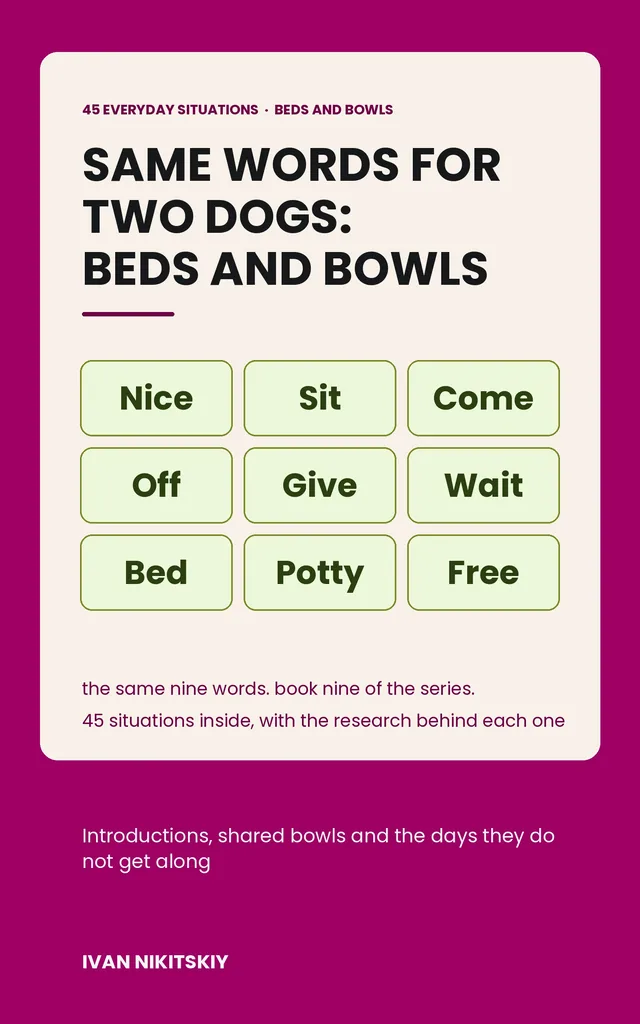
Book 9
Shared words and separate resources for introductions, daily routines, and life with two dogs.
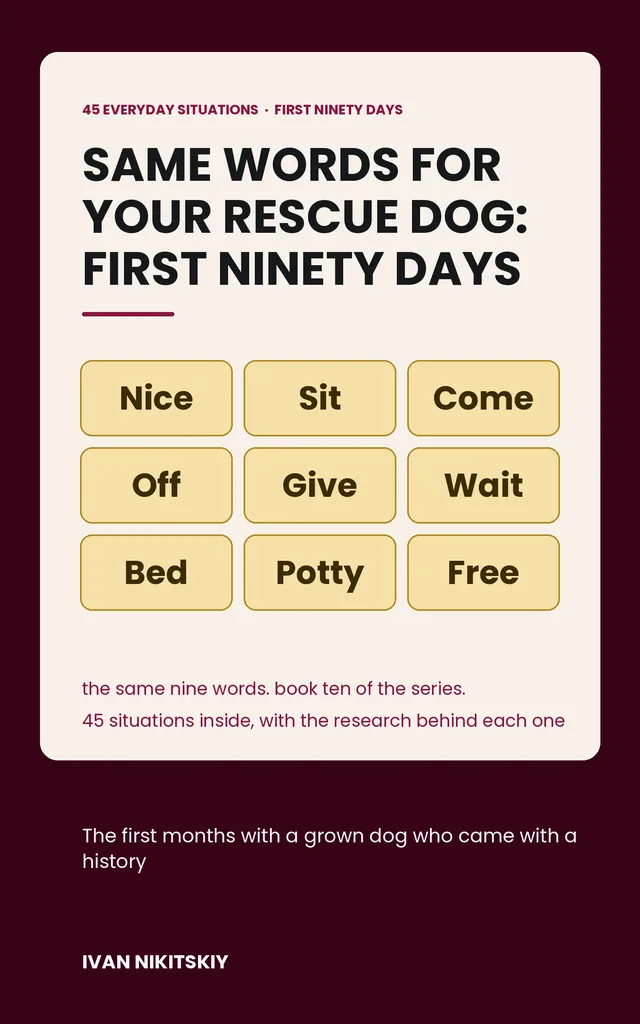
Book 10
A realistic guide to settling in, learning the household, and handling the harder weeks.
A humane foundation
The series follows reward-based principles supported by veterinary behavior organizations, with management and safety treated as part of training.
Read the approach and sources